
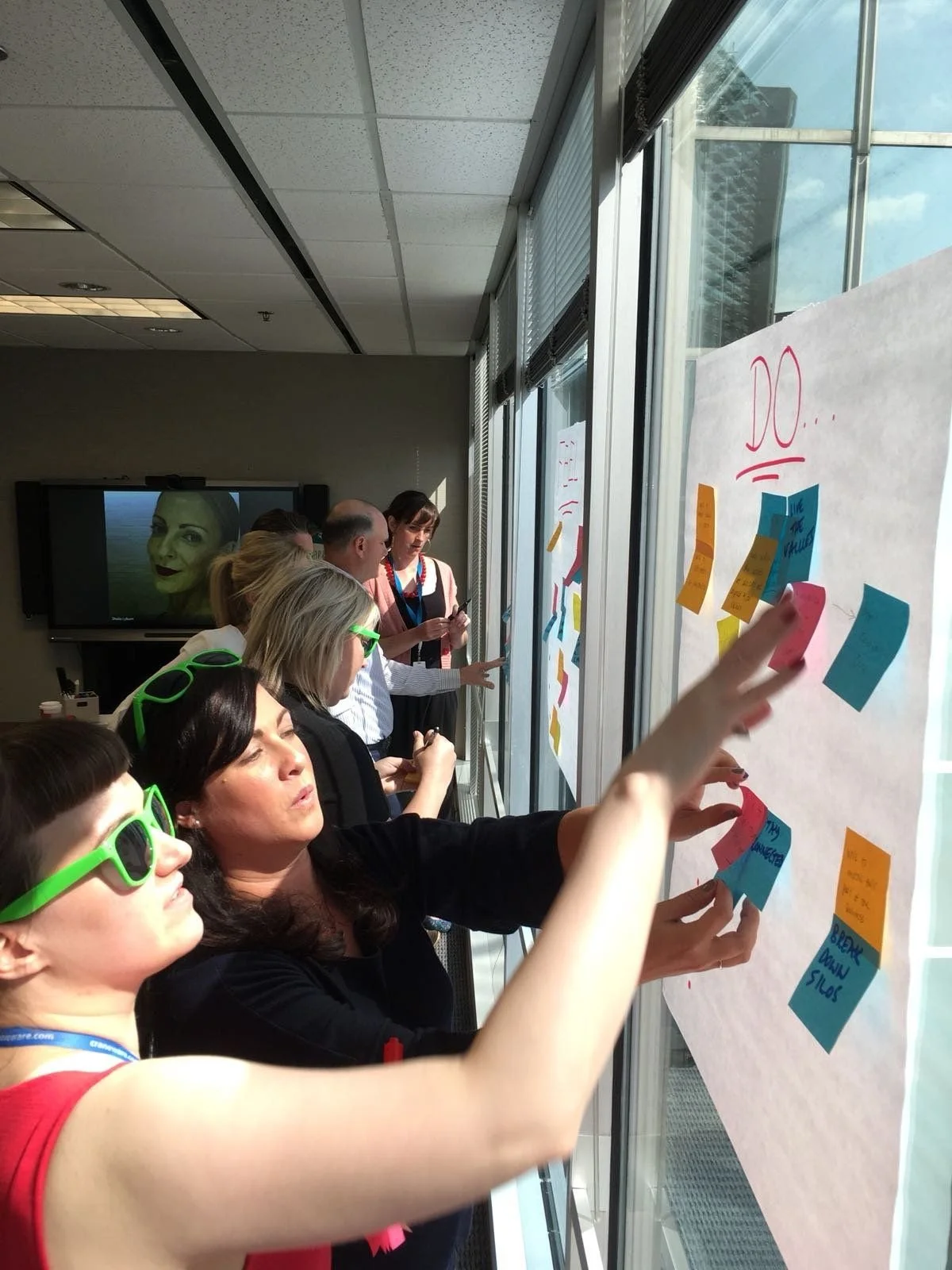
Why the most important part of your event isn't on the main stage.
Over the years, we've noticed something slightly misaligned about the way a lot of meetings are designed.
Organisations can often spend months perfecting the plenary. The stage is beautiful, the content engaging, every last detail has been considered and rehearsed, and the senior leadership team know exactly what they are there to achieve.
Then everyone heads into their breakout sessions, where some of the most important learning of the entire event is expected to happen - and often much less priority has gone into designing it.
There can be an assumption that once something has been presented, it has been communicated. But hearing something isn't necessarily the same as understanding it - and understanding it doesn't necessarily mean you'll know what to do with it!
Which is where breakouts get interesting. This is where strategy can become practical. Where, for example, a new product needs to be properly understood, a sales team works out how something applies to their customers, or people finally have the opportunity to question, discuss and make sense of what they have just heard.
They carry a lot of responsibility.
So perhaps the humble breakout deserves a little more love than it’s often given…
Humans don't absorb information simply because we've presented it to them. Attention is finite and long periods of information-heavy content can quickly push people into passive mode. Changing the environment, the pace and the way people actively participate can reset attention and create an entirely different relationship with the content.
That doesn't mean every breakout needs expensive technical production or another beautifully dressed room, far from it. Some of the cleverest changes cost very little. It just means that we need to consider them as the main event rather than an afterthought or a bolt-on.
Think about what people need to do with the information and design from there. If there is a strong need for discussion, create an environment that makes conversation easy. If they need to practise something, let them practise. If you need honest reactions, think carefully about who is facilitating the conversation and whether the room makes it comfortable to contribute.
The people delivering those sessions matter enormously too. Knowing a subject inside out doesn't automatically make somebody brilliant at helping a room full of people understand it. We need to give them support, involve them in the wider event thinking and help them understand not only what they need to cover, but what they need to help people think, feel and do when they leave.
And across multiple breakout streams, somebody needs to hold the whole picture. Different sessions should absolutely have their own personality, but the overall experience still needs to feel connected. The messages shouldn't contradict each other, they should all feel just as engaging, and every session should know the part it plays in the wider story.
At Freestyle, we talk about breakouts creating ownership, application and activation. Helping people understand what something means for them, work out how it applies in their world and feel ready to do something with it.
Done well, they move people from hearing the strategy to thinking: “this matters to me, I can apply it and make this happen”.
Perhaps that's why we love a well-produced breakout. The plenary may well create the shared moment everyone remembers being part of, but the breakout can often be the place where behaviour change actually happens, where someone finally understands what they're going to do differently when the event is over.
Isn’t that what we're really there for?